One Twenty, Seven Days: A Diary of Small Bets and Big Lessons
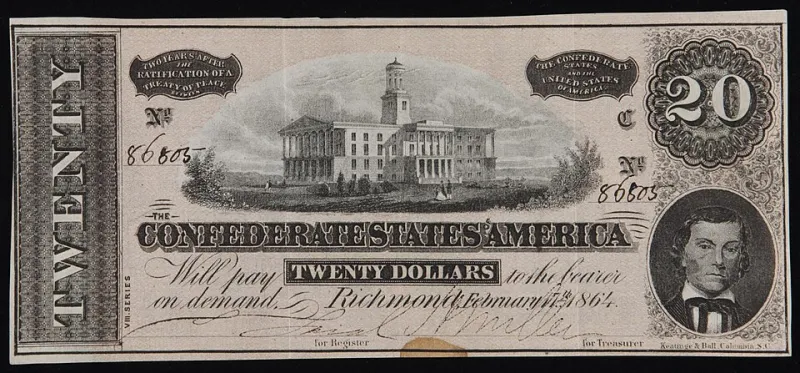
Photo: Confederate States of America (unknown engraver), Public domain, via Wikimedia Commons
There is a certain dignity to a twenty. It's the bill you get from an ATM when you don't want to feel reckless, the one that covers a diner breakfast with enough left for a coffee. So when I decided to test whether a smaller bankroll could actually produce a better gaming session, the Jackson was the obvious guinea pig. Not a hundred, not a grand — twenty dollars, seven days, one rule: when it's gone, it's gone.
I'm not here to tell you I turned twenty into two hundred. I didn't. What I got was something more useful — a spreadsheet full of notes, a handful of genuinely fun evenings, and a clear sense of which habits were padding my sessions and which ones were quietly draining them.
The Setup: Rules Before the First Spin
The rules were deliberately boring, which turned out to be the point.
- Total bankroll: $20. No deposits, no reloads, no 'oops' transfers.
- Bet ceiling: 50 cents a spin, with most spins between 20 and 30 cents.
- Session cap: 25 minutes, timed on my phone.
- Rotation: No more than three different games per session.
- Logging: Every session got a note — total spent, time played, and one sentence about how I actually felt afterward.
That last rule is the one that changed everything. Tracking mood alongside money is like finding a hidden stat screen you never knew the game had.
Monday: Breaking the Bill
The first session was the worst, and not because I lost. I started on a flashy high-volatility slot with a bonus round I'd seen in an ad, bet 50 cents a spin, and burned through $6.40 in about eleven minutes without a single feature. That's a little over a dollar a minute for what amounted to watching reels clatter past.
My note for Monday reads, verbatim: 'Felt rushed. Kept waiting for the good part. Never came.'
Lesson one arrived early: big bets plus a small bankroll equals a session that ends before it starts. A twenty doesn't survive contact with 50-cent spins.
Tuesday: The Rotation Day
Tuesday I dropped to 20 cents and split the session across three games — a low-volatility fruit slot, a medium-volatility adventure theme, and one quirky game with a cascading mechanic. Twenty minutes, $3.10 spent, and I hit two small features.
Here's the thing nobody tells you about rotation: switching games resets your attention. The first slot had gotten stale around minute eight. Moving to the second one felt like walking into a new room at a party. The variety didn't change my odds on any individual spin — nothing does — but it changed my engagement, which is really what you're paying for.
Wednesday: The Slow Burn
Wednesday was the discovery. I picked one low-volatility game with frequent small pays and stayed there for the full 25 minutes at 20 cents a spin. Total spend: $2.80. Total time: a full 25 minutes. That's roughly eleven cents a minute for entertainment, which is cheaper than a matinee and considerably cheaper than a round of beers.
My note: 'Weirdly relaxing. Felt like a coffee break, not a gamble.'
The mood shift from Monday to Wednesday wasn't about winning — I actually ended Wednesday down $1.20. It was about pacing. Frequent small wins keep the session breathing, and a game that pays often feels different in the body than one that holds everything back for a rare feature.
Thursday and Friday: The Mood Data
By midweek I had nine sessions logged, and patterns started surfacing.
- Sessions where I chased a bonus round I'd 'almost' triggered ran long and felt worse.
- Sessions I ended on a self-imposed timer felt better than sessions that ended when the balance hit zero.
- My two happiest notes both came from sessions where I cashed out a small profit — $4.10 and $6.80 — and stopped immediately.
That second point deserves emphasis. Ending on your terms, even with a modest number, feels like a win. Ending because the meter hit zero feels like getting escorted out. Same money, completely different emotional math.
Saturday: The Cash-Out Lesson
Saturday I tried something new: I set a profit target of $5 before I started. Hit $5.60 at minute fourteen on a 25-cent spin, cashed out, and closed the laptop. The remaining eleven minutes of my timer went to making a sandwich and feeling smug.
Was $5.60 life-changing? Absolutely not. But it applied a principle that scales — decide your exit before you sit down, because the version of you mid-session is not a neutral decision-maker.
Sunday: The Final Tally
Seven days, fourteen sessions, $20 spent. I cashed out $11.70 along the way, so the net cost of a week's entertainment was $8.30. I played roughly three and a half hours. That works out to about four cents a minute.
More importantly, my notes got steadily more positive as the week went on — not because I won more, but because the rules got tighter and the sessions got shorter and more intentional.
The Rules a Twenty Taught Me
If you want to run your own version, here's the short version of what worked:
- Size your bets to your bankroll, not to the game's flashiest feature. Small bankrolls want small bets and higher hit frequency.
- Set a timer and obey it. Time limits protect fun better than money limits do.
- Rotate, but not constantly. Three games per session is plenty; game-hopping every two minutes is just restless scrolling.
- Log your mood, not just your money. A session that costs three dollars and feels great beats one that costs twelve and feels like a chore.
- Pick your exit number in advance. Both a stop-loss and a cash-out target.
- Treat it as entertainment spending. The moment a twenty becomes 'an investment,' the fun has already left the building.
A twenty-dollar bill won't buy you a hot streak. It will, however, buy you a week of honest data about how you actually like to play — and that's a bargain at twice the price. Set your own limits, keep it recreational, and if a session stops feeling like fun, that's your cue to cash out and go do something else.