The 'So Close' Trap: How Near Misses Hijack a Session Without You Noticing
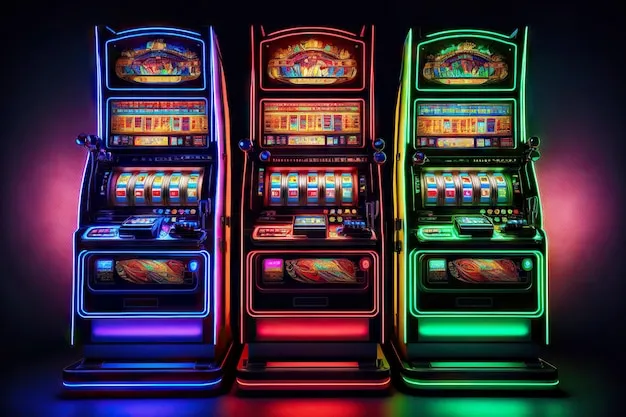
Photo: slot reels close-up with two bonus symbols and one blank reel, dramatic lighting, via img.freepik.com
Two scatters land. The third one, clearly visible on the payline above, stops one position short. The reels go quiet. Your brain, entirely without permission, produces a small warm feeling — and then a slightly louder voice saying, run it again, it's right there.
Nothing about that spin was close to anything. The reels are driven by a random number generator, the outcome was decided the moment you pressed the button, and the next spin is completely independent of it. And yet the near miss is one of the most powerful experiences in the entire medium. Understanding why is the difference between enjoying it and being run by it.
What a Near Miss Actually Is
In gaming research, a near miss is an outcome that looks like it almost produced a win but didn't. Three scatters needed, two landed. A bonus symbol appearing adjacent to the trigger zone. A jackpot symbol on the wrong reel.
Functionally, a near miss is an ordinary losing spin. Structurally, it's a loss dressed in the costume of a win, and that costume is very convincing. Studies going back decades — largely focused on mechanical reel machines — found that near misses increased arousal and motivation to continue in a way plain losses did not. Players reported them as more pleasant, and their bodies behaved as if something good had happened.
The mechanism is pattern recognition doing its job too well. Your brain is a prediction machine, and it's rewarded when a prediction comes close to landing. Two out of three is close. The reward circuitry fires a small puff of 'we almost had it,' and that puff is what makes the next spin feel like an errand rather than a choice.
The German Study That Should Be Required Reading
The most cited work on this comes from researchers who compared near-miss outcomes against full-miss outcomes on actual slot machines. Near misses recruited the brain's reward regions and increased the desire to keep playing — while simultaneously being, by any accounting, a loss. Some of that research also involved problem-gambling classification, and the finding there is uncomfortable: near misses appear to have a stronger pull on people already at risk.
None of that means near misses are rigged or sinister. They're a natural byproduct of how slot geometry and symbol frequency work. When a game has three-scatter bonuses and a finite set of reel positions, near misses will occur at a mathematically predictable rate. The important part isn't the frequency — it's the interpretation your brain assigns.
How Games Use Anticipation (Legitimately)
Game designers aren't villains for building anticipation. Anticipation is the reason slots are fun at all, and the best designers wield it deliberately.
- Slowdown reels. When the last reel spins noticeably longer, the game is signaling possibility. This is presentation, not probability — the outcome is already set.
- Scatter teases. Two scatters landing while a third reel stutters is pure theater, and good theater at that.
- Expanding wild hesitations. A wild symbol that visibly hovers before deciding where to land turns a single spin into a three-second story.
- Mystery symbol build-ups. Symbols that flip slowly to reveal a multiplier create a payoff-per-second curve that keeps attention locked in.
These are the same tools a movie uses in a suspense scene, and they're the reason a well-designed slot feels like more than a shuffle button. The trick is recognizing them as production value rather than information about what's coming.
Spotting the Costume
Here's the practical skill: learn to name what you're experiencing while you're experiencing it.
Reframe the near miss as theater. When two scatters land and the third reel drags, say — internally, silently — 'that's the suspense beat.' You're not being told the next spin is likely to hit. You're being shown a nice piece of animation.
Separate the feeling from the forecast. A near miss reliably produces a feeling. It produces zero information. Two scatters tells you exactly as much about your next spin as one scatter, or zero, or a paperclip.
Watch for the phrase 'it's due.' Nothing is due. Independent events don't owe you a correction. If you catch yourself narrating a session like a baseball announcer talking about a hitter's cold streak, you've handed the wheel to a story your brain invented.
A Practical Toolkit for the 'Almost' Problem
If you want the thrill of the tease minus the creep toward 'one more spin,' a few habits go a long way.
- Decide your stop before you start. Both a loss limit and a session timer. The near miss's whole trick is that it arrives mid-session and says 'not yet.' A pre-set exit doesn't negotiate.
- Set a bet ceiling that barely moves. Near misses hit harder when a chase would require raising your bet. Keep it flat and the temptation loses oxygen.
- Count near misses instead of ignoring them. Literally tally them. Within twenty minutes you'll have a number, and that number drains the drama out of each one. Ten almosts in half an hour is a data point, not a destiny.
- Play games whose tease you actually enjoy. This isn't about lowering volatility until nothing happens — it's about picking mechanics where the anticipation itself is the entertainment, like hold-and-win respins or cascading bonuses. If you're going to pay for suspense, get good suspense.
- Take a five-minute break after any spin that makes your heart rate jump. Near misses have their strongest grip in the sixty seconds after. A short pause breaks the chain before it forms.
- Log your mood, not just your balance. A session full of teases that felt amazing and cost five dollars is a good session. A session full of teases that felt amazing and cost eighty dollars is a session that hijacked you. The money total tells you which one you're in.
The Bottom Line
The 'almost' is the most honest thrill the format offers — a genuine jolt of hope produced by a structure that isn't promising anything. There's nothing wrong with liking it. There's everything wrong with mistaking it for a tip.
Enjoy the slow reels, the stuttering third reel, the wild that hovers before it lands. Then check your timer, look at your balance, and decide what you want to do next — instead of letting a spin that didn't happen decide for you. Keep it recreational, set limits you actually respect, and if 'almost' ever starts feeling like a debt, that's the moment to cash out.